
A Taxonomy of Trump DOJ Corruption
Shortly after the 2024 election, I offered a framework for making sense of the coming chaos, dividing Trump’s transgressions among what I called the three horsemen of the Trump II apocalypse: retribution, corruption, and destruction.
That has proven in the subsequent months to be a durable framework, not perfect, but generally reliable. Still, I have at times over the past 18 months felt like a 19th century taxonomist trying to make sense of the natural world. Some stories defy easy categorization. Is this the same species? A subspecies? Or does it deserve to be a new species?
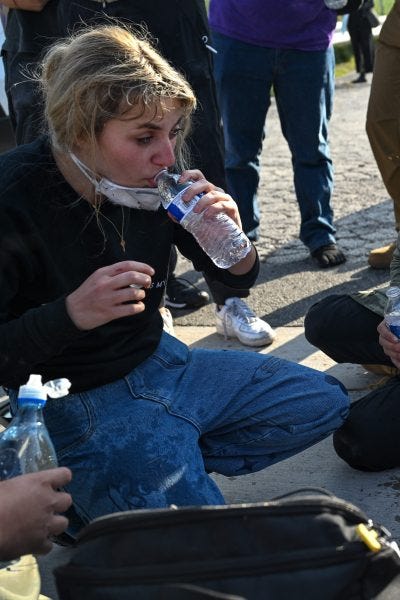
The Broadview Six case has been one of those that is hard to classify. Is it a Operation Midway Blitz story, fundamentally about ICE and mass deportation? Or is it a story of DOJ corruption or retribution, or both? All of the above?
With the newly released transcripts, ordered unsealed by U.S. District Judge April Perry of Chicago, we have a bit more insight into the case, and though it’s still not easy to categorize, that in and of itself ends up being illuminating:
First, the Broadview Six case has never felt like it had the hallmarks of the retributive prosecutions Morning Memo has been so focused on. With some important caveats (more on those in a moment), the case appeared to be mostly run through the U.S. Attorney’s Office in Chicago, not out of Main Justice or by political appointees parachuting in. Notably, the DOJ prosecutor who has emerged as the leading villain in the narrative was a career prosecutor (not a political appointee like Lindsey Halligan thrust in front of a grand jury) who was not obviously a Trump flunky.
Second, the problems with the Broadview Six case don’t necessarily seem new or confined to Trump II. If line prosecutors, as the transcripts seem to show, are casually violating the grand jury rules by, among other things, talking to grand jurors outside of the grand jury session, personally vouching for the evidence, failing to notify the court of no true bills, and misstating the law, then it suggests that there were problems that pre-existed Trump II and its decimation of the DOJ’s professionalism. I can hear my readers who are criminal defense attorneys crying “D’uh!” in unison.
Third, the problems that emerged in the Broadview Six case seem compounded by the Trump II takeover of the DOJ. Any pre-existing bad practices or patterns of prosecutorial misconduct seem likely to have been further exacerbated as the department’s professionalism eroded, career attorneys headed for the exits, and remaining prosecutors dealt with an increased workload, compounded by the flood of immigration cases the administration unleashed.
Fourth, the Broadview Six case came at a time of rampant DOJ chaos. U.S. attorneys were racing to respond to radically new department priorities and politically motivated demands from Main Justice, which itself was responding for the first time to direct orders from a notoriously chaotic White House. The chaos unleashed by a loose and broken chain of command, with an erratic president and freelancing White House aides at the top, would be expected to trickle all the way down to line prosecutors.
Fifth, the Broadview Six case and its aftermath suffered from a wider management breakdown at DOJ, while the administration laid siege to blue American cities. The Chicago U.S. Attorney’s Office seemed to suffer from problems similar to what we saw in Minneapolis in the aftermath of Operation Metro Surge, where the U.S. Attorney’s Office had trouble even prioritizing cases, court orders, and deadlines. That’s a sign of an overarching management problem that doesn’t neatly fit into any one bucket but that does amplify the problems under Trump II: An office in chaos is even less able to effectively fend off demands from Main Justice.
Sixth, the case morphed into a cover-up. It was amidst this department-wide chaos that some of the most egregious conduct occurred, not in the grand jury room itself, but in responding to defense counsel and Judge April Perry. DOJ lawyers weren’t candid with the court, transcripts were redacted in ways that concealed some of the worst transgressions, the truth was elided. It went from misconduct to a cover-up of the misconduct.
Now back to those important caveats I mentioned:
(i) While the Broadview Six doesn’t feel like the other retributive prosecutions, I don’t want to get too fine-grained about it. The fact that the defendants were ICE protestors and included a Democratic candidate for Congress, one of her staffers, and a Democratic committeeman always made it ripe for vindictiveness, which the defendants have aggressively pursued evidence to prove.
(ii) The extent of the involvement from Main Justice, including Todd Blanche’s aide, Associate Deputy Attorney General Aakash Singh, remains to be fully determined. New facts may yet be uncovered that nudge this case closer to some of the others we’ve seen where political appointees in D.C. were giving marching orders.
What makes the unraveling of the Broadview Six case stand out is how it shows the pervasive impact, at all levels, of the corruption of the Trump DOJ into a politicized and weaponized tool of the White House.
Quote of the Day
“I heard this case like last week and I thought it was a crock of shit then and I still think it is.”—a grand juror, in newly unsealed grand jury transcripts in the Broadview Six case
Slush Fund Watch
Patrick Davis, the assistant attorney general for legislative affairs, tried to recuse himself from matters relating to the $1.776 billion “Anti-Weaponization Fund” because he himself planned to make a claim for actions the Trump I DOJ took when he was a top aide to Sen. Chuck Grassley (R-IA), Politico reports. Current DOJ officials decided his recusal wasn’t necessary.
New filings in two of the civil lawsuits seeking to invalidate the “Anti-Weaponization Fund” suggest DOJ officials are still refusing to definitively commit to the fund being dead and buried.
Looking ahead: I’ll be in federal court late this afternoon in D.C. for a hearing in front of U.S. District Judge Richard J. Leon in one of the lawsuits challenging the “Anti-Weaponization Fund.” Stay tuned …
Blanche Confirmation Watch
If the past 16 months are any guide, Senate Republicans will find a way to cave to President Trump’s demands that they confirm Blanche as attorney general. But things have changed! you might say. Thom Tillis is retiring. Bill Cassidy and John Cornyn were defeated in GOP primaries. Perhaps. But the early indications aren’t looking great.
Here’s Cassidy with reporters yesterday: “I have to be convinced that Todd is not the president’s personal attorney who happens to be attorney general, but that Todd is the attorney general who used to be the president’s personal attorney.”
If Cassidy isn’t convinced yet, I don’t know what could convince him now.
Cornyn was similarly noncommittal with reporters: “I have no red lines right now, but we’re going to have an interesting conversation.”
No red lines …
2026 Midterms: Maine Edition
Maine-Senate: Graham Platner easily won the Democratic nomination to challenge five-term incumbent Sen. Susan Collins (R).
CA-Gov: Former Fox News host Steve Hilton (R) secured the second runoff spot over billionaire climate activist activist Tom Steyer (D) and will face former DHS Secretary Xavier Becerra (D) in the general election.
SC-Gov: Republican Reps. Ralph “Marshall Law!!” Norman and Nancy “I’m sick of your shit” Mace both failed to make the runoff in the GOP primary, meaning neither will hold public office any longer once their terms in Congress expire in January.
Saying the Quiet Part Out Loud
No, The Constitution Is Not Colorblind
Law professor and civil rights attorney Sherrilyn Ifill:
I will not participate in the pretense that colorblindness is a vision for our country grounded in our Constitution. It has become a weapon designed to cloak the Court’s decisions dismantling our civil rights infrastructure with a veneer of principled nobility. It represents at best, the wishful thinking of justices who have declared their sensibilities to be too delicate to concern themselves with, as Chief Justice Roberts once put it, “this sordid business” of “dividing people by race.” At worst, it is a cynical ploy designed to erase the work of activists, lawyers, and Congress who built a civil rights infrastructure to advance Black equality. Or perhaps a long game effort to tie the hands of future Congresses that might be inclined, as Congress was during the Civil Rights Movement, to respond to demands for equality and justice by passing civil rights laws.
Must Read
Sarah Posner: What the Pentagon’s Snub of Mormons Was Really All About
Thread of the Day
Hot tips? Juicy scuttlebutt? Keen insights? Let me know. For sensitive information, use the encrypted methods here.
I read this column avidly every day. It’s well organized, well written, and perceptive. Thanks!!!
In response to the Elon musk retweet of the inestimably offensive Rupert Lowe MP tweet, I live in the US, and there is a particular "dangerous third world savage" I would really like to see removed from our country: he broke immigration laws by working while on a student visa, he has poisoned our national discourse, interfered in our foreign policy, donated $250 million to a presidential election in an attempt to affect the outcome, performed a Nazi salute twice at the president's inauguration, among too many other offenses to even enumerate.